
Fun Facts About Your Eyes
Diabetes can affect your eyes at the same time it affects your kidneys.
Each blink is 400 microseconds.
Always sunglasses to protect yourself from UV light even if it is not sunny.
Reading your phone all day without a break may give you a headache.
Asian eyelids have an epicanthic fold, a slightly different anatomy than Caucasians.
Wrinkles around the eyes are aggravated by sun damage.
Sagging lower eyelids can be due to medication or aging.
If your eyelashes are falling out, and you are not taking any medications, see your doctor.
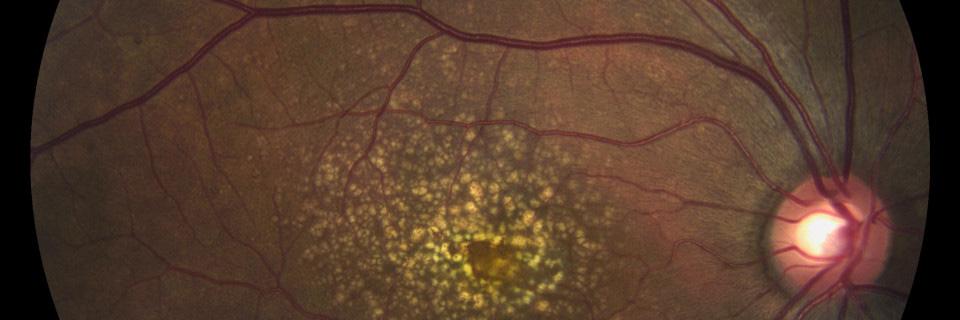
Age related macular degeneration occurs usually at age 55: don’t take the eye vitamins unless you have the diagnosis.
The dosage on the bottle may be too strong for you if you are normal.
In some major cities in China, there is an incidence of 90% of nearsightedness among the children.
In Europe, Asia and Australia, there are eyedrops for nearsightedness.
Glaucoma, an eye disease, can occur at any age, from birth to old age.
Diabetic people can wear soft contact lenses but under the care of an ophthalmologist or optometrist.
You can lose vision when climbing up a high mountain.
Yellow tinted glasses are helpful at 5 pm and 7 am for sports or driving.
Upper eyelid cosmetic surgery is easier to perform and is safer than lower eyelid cosmetic surgery.
You can ruin the special coatings of your eyeglasses if you use alcohol or very strong detergent.
If you let water get into your eyes while wearing contact lenses, you can have a serious infection. Be careful.
There are female hormone receptors for eyelash growth that are different from the men.
Do not share contact lenses.
Diabetes can affect the cornea, the outside part of the eye.
Polarized tinted glasses are helpful in the sun for sports.
Your tears provide antibodies to fight infection.
Artificial tears are helpful for your eyes when the air is hot and dry or extreme cold.
Smoking can cause fine wrinkles around the eyes.
Jumping on a trampoline as an adult can lead to a retinal problem.
Most Caucasian babies have blue eyes at birth.
Washing your hands is important to fight eye infections.
Babies cannot see color until age 6 months.
Thyroid disease can affect your eyes.
Rubbing your eyes is not considered good if you are very nearsighted
(myopic) or if you had eye surgery even LASIK.
Colorblindness is on the X chromosome so men are more likely than
women to be colorblind.
In the embryo, the eye is formed from the same tissue as the brain.
If you sleep overnight in your contact lenses, you can have some serious problems. Be careful.
Hepatitis virus has been found in tears.
Some people have one eye that is blue and the other eye that is green.
African American babies have eyes that darken at 6 months.
The first inventor of eye surgery instruments was in ancient Persia.
If you see the color red as brighter in one eye than the other, see your eye MD.
There are now treatments for age related macular degeneration that can return the patient to driving vision.
If the outer third of your eyebrows are falling out, see your doctor. You may have thyroid problems.
The three leading causes of blindness are diabetic retinopathy, glaucoma and age related macular degeneration in the US.
AIDS has been found in tears.
After cataract surgery, your eyesight is brighter, usually within one week of surgery.
Certain parasites attack the eye: pork, lamb and beef parasites. So avoid poorly cooked pork, beef and lamb.
After cancer treatments, the eyelashes usually grow back fully.
Your baby’s eye color is lighter at birth than at 6 months.
Nearsightedness is inherited.
20% of the population have an eye that is not quite round like a sphere, but more oval, this is called astigmatism.
Corona virus has been found in tears.
You can have UV protection built in the front and back of your glasses, ask your optician.
At birth, babies only see black and white.
If traveling abroad, do not wear your contact lens to swim or shower.